Showing posts with label Book Reviews. Show all posts

Book Review: The Art of the Deal

Wednesday, January 11, 2017

Around the time I read Hillary Clinton's It Takes a Village, I also purchased a copy of Trump: The Art of the Deal, by Donald J. Trump with Tony Schwartz.  This year, I finally got around to reading it--and was surprised how quickly I finished.  This book has a very easy-to-read style.
Published in 1987,  the first chapter details a week in Trump's life.  The book then goes on to tell Trump's story, with a special focus on each of his big deals.  The stories are revealing.  Love or hate him, Trump is Trump.  He's well educated, but a bit rough around the edges.  And that's exactly what his book is like.  The type of language he uses in his speeches is what you'll read in his book.

Book Review: It Takes a Village

Sunday, October 30, 2016

A few months ago, I checked out It Takes a Village: And Other Lessons Children Teach Us, by Hillary Clinton from a local library.  I decided to read the book because I figured my best bet on persuading myself to vote for Donald Trump would be to become thoroughly appalled by Clinton's way of thinking.
It takes me a long time to finish a book when I'm reading it just because I dislike the author.  And It Takes a Village was anything but a captivating thriller.  The only thing making me excited to flip each page was the prospect of being that much nearer the end.  

Book Review: The More of Less

Friday, August 12, 2016

Do you want more money, more time, and less clutter and stress?  Blogger Joshua Becker's The More of Less: Finding the Life You Want Under Everything You Own, published this year, may be the book for you.
Winning The More of Less in a giveaway at Cheryl's blog, Homespun Devotions, came as a big surprise.  I had commented on her giveaway post about minimalism without giving it much thought, so when Cheryl wrote to say I had won, I did a double-take! "Wait...I entered a giveaway?!  Oh, come to think of it, I guess I did."  A few days later, I received it in the mail.  I was a skeptic, but decided to read it through. 

Book Review: Hearts of Fire

Sunday, May 1, 2016

Over seventy percent of Americans claim to be Christians, but what does being a Christian mean to us?  Would we still so eagerly claim our Christian faith if identifying as such meant being disowned by family, watching our towns burned, spending years in prison, facing torture, or seeing our family killed?
For the eight women whose stories this book tells, the answer was yes.  Originally published by the Voice of the Martyrs in 2003, the oldest story in Hearts of Fire: Eight Women in the Underground Church and Their Stories of Costly Faith is the story of Sabina Wurmbrand (1945).  Other stories take us into the early twenty-first century.

Book Review: Chess Puzzle Learning Levels, Volume I

Wednesday, February 17, 2016

I love playing chess, but studying chess has always been a chore.  Most chess books are terribly boring, especially the ones heavy on puzzles.  I enjoy Silman's chess books because he adds enough humor to make his lessons palatable.  But I had never met a chess puzzle book I loved (or even liked) until I met Wyckoff's Chess Puzzle Learning Levels.

Book Review: A More Perfect Union

Thursday, February 4, 2016

At the Ben Carson book signing at Barnes and Nobles in Waterloo back in October, I purchased Carson's 2015 book, A More Perfect Union for $20.  Carson signed it on the front page.

Book Review: Leila Ada the Jewish Convert (Part 2)

Tuesday, December 17, 2013

One of Leila's first goals on returning to England was to meet with other Christians.  She didn't wish to displease her father, so she usually went to a chapel stealthily in the evenings, wearing a heavy veil.  Finally, she decided to confess the Lord publicly, and after meeting with the minister, she was baptized and partook of the Lord's supper.  

"My time is short;" she wrote, "the veil which separates me from eternity may soon be drawn aside.  Indeed, I am not able to repress a serious and solemn foreboding that my days on earth will not be prolonged.  How important that I should prepare...and not be caught unawares."

The Lord filled her with joy and peace, so that she was "happy beyond expression."  She was very nervous about telling her father about her faith in Jesus, because she had never done anything to displease him--and he had never spoken an unkind word to her.  Finally she gained enough strength to write him a long letter telling him in loving words about her new faith in Jesus and the many proofs which showed He is the Messiah.  She left the letter on his dressing table and spent the night in prayer.  

In the morning her father was very sad and told her she could not see him for a week.  After this time, if she persisted in "apostasy" she would be sent away.  When the week was over, she was sent to her uncle, who was a much more devout Jew than her father.  Her uncle was given instructions that she was to be allowed no Christian reading material, and that she could not be allowed out of the house without someone accompanying her to ensure she did not attend the chapel.  

Leila's uncle told her to be quiet about her Christianity, not mention it in his house to "corrupt" any of the family members, and not speak of it to others--as that would embarrass the family.  Leila's aunt had a busy social life and insisted on taking her beautiful niece with her to a myriad of parties and balls.  This was a trial to Leila because she had a very quiet nature.  Finally Leila became tired of her uncle and aunt's rules and resolved not to hide the light of Christ under a bushel.  She replied to an invitation to a ball, declining it and stating that she was a Christian.  This greatly angered her relatives and severely increased her trial.  

The family began to shun her, wouldn't permit her to eat with them, held their clothes back when they passed her in a hall to ensure she would not touch them, argued with her, and scorned her.  Even the servants began insulting her.  Her eldest cousin, Isaac, however, would have none of this.  He used his influence in her favor, was a very careful and thorough thinker, and had many intelligent discussions with her about the New Testament.  When he began to speak openly of his inclination to become a Christian, the family became even more enraged and blamed his "apostasy" on Leila.  

Finally, two rabbis and several Jewish elders were called in one last effort to save Leila from Christianity.  They argued with her for 7 hours, but she was never at a loss for words, giving reference to the scriptures and refusing to recant.  They became very angry, and one rabbi exclaimed, "Wilt thou then deny it, young incorrigible?  Wilt thou put all present to the lie?  Then on God's behalf I smite thee."  He struck her on the cheek and an elder spat in her face.  She was then excommunicated and all the curses of the law of Moses were pronounced against her.  Any Jew (including her father) who would come near her or allow her in their house would be under their anathema.  She was given 3 days to leave.

The next day, Leila left to stay with Christian friends.  She was in bad health, and sent a letter to her father telling of how she was treated and asking if she could come home.  Her father was very angry to hear how the relatives had treated her, and, holding the rabbis' curses in contempt, rode out in his carriage to take her home with him.  He treated her very kindly and let her go to the chapel whenever she wished.
She started regaining strength and could sing, work in the garden, and play the piano; but the revitalization of her frail frame was only temporary.  She knew that she would soon see her Savior, and spent her time writing to friends and relatives about Jesus.  A friend wrote that "It was plain that her thoughts had fled from earth, and joined the hymning circles of bright spirits in heaven." 

Her health again worsened, and she knew she was dying, or as she put it "Immortality is dawning upon me."  It was very painful for her loving father to watch her decline.  And the thought of leaving her father forever without any assurance that he would meet her in heaven was too dreadful for her to bear; her only desire in life was to see him saved; after that, she said, she could die without a single regret.  They had many conversations, and Leila urged him to read the New Testament and trust in Jesus so she could see him again in heaven.  

A Christian friend, Emily, came to stay with her.  Sometimes Leila was in severe pain, but she never complained.  She gave instructions that her Bibles be given to relatives with her dying wishes that they read them.  "Tell them," she said, "that with my latest breath, I testified, Christ is precious."  She said that He was with her in the valley of the shadow of death, and she was victorious through Christ.  The last words she wrote were "Christ is heaven."  

The morning of her death, she called for her father and told him not to grieve, "If you are faithful to God, you will soon be happy again with me in heaven."  "Then, my precious treasure, you are not deceived!  You feel that your religion fully supports you in death?" he asked.  "O yes! O yes!  Though I walk through the valley of the shadow of death, I will fear no evil..." she replied.  Her father told her he had begun to read the New Testament, and had never expected to see a death like hers.  He then confessed to all present that he too would believe in Jesus.  She gave him her Bible.  

"I hear the voice, the Master is come, and calleth for thee.  My whole soul responds, Even so come, Lord Jesus.  I am full of glory!" she said.  A little after 8 pm, she told her father, "Farewell, my dear papa, I am going to glory.  Serve Jesus--you will soon be there."  At 8:15 she died at the age of 20 years and 18 days.  Shortly less than a year later her father also died peacefully with an unshaken reliance upon Jesus.

The end of the book was very sad and touching--I couldn't keep from crying.  It doesn't seem like 20 year-olds should have ill health and die, but she accomplished more than some people who live to be 4 times her age accomplish in their lifetimes.  Her writings are filled with interesting insights.  She had a passionate desire that her people, the Jews, would acknowledge the Messiah, and a simple faith, joy, and loving trust in Jesus, her Lord.  The language with which these feelings are expressed is reminiscent of the woodwork in Victorian style houses, the ornate cathedrals of the old world, and the bubbling brook in the meadow.  Newer books, like modern houses,--though they serve their purpose--do not seem to similarly realize the innate elegance of the English language (or the delicate ornateness of architecture).

Reprints of the book are available on Amazon and Ebay, and I would definitely recommend it as a literary feast for all who wish to indulge in a beautifully written Christian life story.  

Book Review: Leila Ada: The Jewish Convert

Monday, December 16, 2013

My grandmother gave me the book Leila Ada, The Jewish Convert: An Authentic Memoir by Osborn W. Trenery Heighway for my birthday this summer.  She found the book, copyrighted in 1853, a few decades ago in my great grandfather's attic.  She loaned the book to several people, and at least 2 Jewish friends were converted after reading it.  

I was immediately impressed by the beauty of the language employed in writing this book and the skill of the authors.  The loveliness of the prose is sufficient to satiate the thirst of any poet--or sesquipedalian such as myself.  

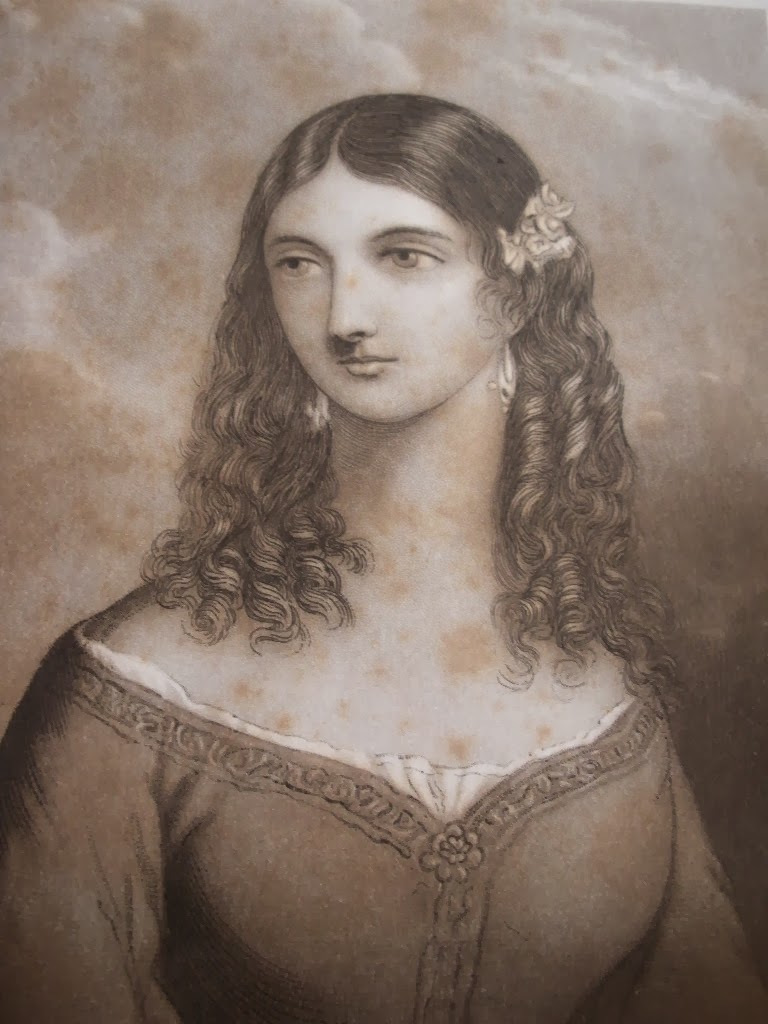
Leila lived in a mansion in England with her father, and was raised as a Jewess.  Her mother--the love and light of her father's life--had died 2 years after her birth.  He lived for Leila, giving her a happy childhood, playing with her, and teaching her how to play the piano.  Leila was beautiful and very intelligent, fluently reading and writing several languages.  She was also thoughtful and reserved.  She started writing a diary at 16, and the contents of the book are mostly taken from her diary.  
Leila was very studious, writing "I strive to occupy every moment well; I do this, not simply because it is my interest, but also, and I hope and believe chiefly, because it is my duty."  She studied the Old Testament and also many Jewish books such as the Talmud, with which she was not impressed.  

When Leila was 18, her father decided to take her on a pilgrimage to the Holy Land. She was very excited about the trip.  Before leaving, she decided to study the New Testament.  She saw that Christians were a most happy people and wanted to understand why.  At the least, she thought, reading the New Testament would enable her to intelligently argue with them concerning religion.

Her journey to the Holy Land took her through Switzerland where she visited with shepherds, enjoyed snowball fights in the Alps, and visited the glacier of Rosenlaui.  During this time she wrote in her diary her grief at not knowing the way of salvation.  She saw through the scriptures that the Talmud was "altogether a fabrication of man."  And cried to God, "Thou knowest--thou art my witness--how much I desire that my heart may be rightly guided, and entirely subdued to thy service...Nothing but the constant presence of Him who fills the earth and heaven, can content my soul."  

From Switzerland she and her father traveled to Italy, facing a terrible storm in the mountains.  They visited Milan, many beautiful cathedrals, and the amphitheatre in Verona.  What seemed most to impress Leila though, was Venice. "It was a lovely moonlight evening as we approached the Adriatic, and such a moonlight--so soft and yet so bright and dear, as I never saw before--a thorough Italian sky and landscape.  The sparkling eyes of night twinkled like precious brilliants in the liquid azure.  The exquisitely tinted, bluish-roseate mist, hovered over the plains which stretched before and on each side of us; the effect was rendered intensely beautiful--became indeed a feeling--as the silvery light of the moon pierced through it."  They stepped into a gondola as they entered the city, and she was delighted by the exquisite loveliness of the sight.

 From Venice they continued their journey toward Rome, viewing the Velino waterfalls and the battlefield where Hannibal defeated the Romans.  In Rome they saw the ancient ruins and the Coliseum.  The climbed to the roof of St. Peter's, where they enjoyed a view of 400 feet; and visited the Vatican Palace and several castles.  From there they went to Naples, and finally left the country for Greece.  

In Greece they visited Athens, the Parthenon, olive groves, and Mistra in the Isthmus of Corinth, and viewed the place which had once been Sparta.  Then they took a ship from Greece to Turkey.

In Constantinople, they stayed a few days.  Leila spent hours visiting ancient Turkish cemeteries, and almost got into a lot of trouble when she nearly walked into the mosque of St. Sophia during prayers.  
Shortly before reaching Jerusalem, Leila wrote that she no longer could doubt that Jesus was the Messiah.  The New and Old Testaments agreed.  "I wish to be a Christian, O Lord!  Calm my troubled spirit.  Do of thy loving kindness guide me to thy simple truth.  Let me rest and be at peace beneath the canopy of thy love.  Teach me thy law of liberty, as thou in the word has described; and having taught me thy will, assist me to follow thee, to give up my own, whatever shall happen to my body." 

In Jerusalem she saw the Mount of Olives, the garden of Gethsemane, the bed of the brook Kedron, the Valley of Jehoshaphat, and Mount Moriah.  She became severely ill shortly after reaching the city, however, and her father decided to cut short the trip and take her home as soon as she was well enough to travel.  They returned to England after visiting Alexandria, Egypt, taking a steamship to France and quickly reaching home.  

Her adventures reminded me of Hannah Hurnard's Hinds Feet in High Places, because of her many contemplations at each location--the storms, the precipices, illnesses, good influences, times of joy, and lessons she learned.  It also struck me what a good blogger Leila would have made had she lived 150 years later!

Part 2 of this review (Leila Ada's life as a Christian) will be posted tomorrow!

Book Review: Government Bullies

Wednesday, December 4, 2013

I've enjoyed reading several of Ron Paul's books, so when I decided it was time to purchase a new book to read on my Kindle, I decided to try his son Senator Rand Paul's 2012 publication, Government Bullies: How Everyday Americans are Being Harassed, Abused, and Imprisoned by the Feds.  

Government Bullies is available in hardcover (320 pages) and paperback formats as well, but the Kindle format is very convenient--no pages blowing in the wind when I read outside, and I can easily carry it in my purse to read anywhere, between rounds at a chess tournament or sitting in the car on a road trip. 

 The format of the book is consistent.  To each part there is an introduction, in-depth stories of grievances, and a section about what can be done to solve the problem.  The style is informal; it's not a literary masterpiece, but is a lot like the way I imagine Senator Paul would talk if he were giving a speech or addressing constituents.  


Part 1 address EPA Bullies.  Paul points out that EPA regulations cost more than 5% of our annual GDP, and is equivalent to the costs of defense and homeland security combined.  People have been sent to jail for 3 years for moving dirt onto their own property.  One woman, her father, and engineer were sent to jail by the EPA for violating wetland laws on her property when her land was so dry it didn't even flood during Hurricane Katrina.  Wetland regulations and the Clean Water Act need to be clarified so that the EPA and Army Corp of Engineers do not abuse property openers.

Part 2 concerns the Lacey Act, a law which has been expanded over it's more than 100 years of existence so that the United States can prosecute people and companies for violating foreign laws.  Gibson Guitars was raided by both the Department of Homeland Security and Fish and Wildlife armed agents and SWAT teams for allegedly using "endangered" wood from Madagascar to make guitars.  Many guitars, materials, and equipment were confiscated.  

In another case, Paul writes that a lobster fisherman's 70,000 lb. shipment of lobsters was confiscated because of a tip from an anonymous caller.  The fisherman was prosecuted by the U.S. government on violating three Honduran regulations: 1. Lobster tails cannot be less than 5.5 inches long (3% of the shipment was), 2.  Lobsters cannot be egg-bearing (7% were), and 3. Cardboard boxes must be used for shipping (he use clear plastic bags.)  No charges were brought against the man in Honduras, and the Honduran government later informed the U.S. that the cardboard box regulation had been repealed in 1995, the egg-bearing regulation had been repealed retroactively, and the lobster tail length regulation was never signed into law.  However, the fisherman in question, dubbed "the ringleader of the smuggling operation" by press releases, was given an 8-year sentence and was still in a federal prison at the time of the publication.  

Part 3 describes the abuses of the TSA: naked body scanners, intrusive pat-downs, sexual molestation, rampant abuse, humiliation of the elderly and ill, theft and overall corruption.  Paul claims that the TSA doesn't make us completely safe, but rather less free.   Paul recommends an Air Traveler's Bill of Rights to protect against TSA abuses.  But he believes the best solution is to end the TSA and privatize airline screeners.  Airlines have a vital interest in making sure their passengers are safe, and it would be bad business for them if they treated their passengers disrespectfully.  

Rand Paul also decries sending foreign aid to countries which are not friends of the United States or which detain or hurt U.S. citizens.  In fact, he says, borrowing money from the Chinese to give as foreign aid to other countries makes no sense at all.

Part 4 explains that though the FDA and USDA were formed with good intentions and indeed have necessary roles in the government, they too have expanded out of proportion, raiding even small Amish farmers selling "illegal" raw milk.  "Isn't it insane to think that in America someone could be arrested for the 'crime' of drinking milk directly from the cow?" Paul asks.  Another family in Missouri that started a small rabbit business to give entrepreneurial experience to their teenaged son was threatened by the FDA with a $3.9 million fine because they had violated a mysterious law that prohibited selling more than $500 worth of rabbits in one year (they grossed $4,600 which provided a $200 profit which they used to eat out at restaurants a few times).  
___________________________

The stories presented in Government Bullies will not give you sweet dreams, so I do not recommend the book as bed-time story material.  I do recommend it, however, to anyone who is not aware of the many injustices committed by the government.  Rand Paul's goal in writing the book is to promote liberty activism and inform the public of the outrages happening every day in this country.  For those who already understand the infernal depths of bureaucracy, this book will feed the fires of the soul burning with zeal against the injustices of the government.  

I shall conclude with a friendly reminder--be sure you read the 4,450 federal crimes in U.S. code and 10,000's of regulations before going about your daily tasks.  Otherwise you may find yourself a criminal like the individuals mentioned above, facing years of imprisonment, armed government raids, and multimillion dollar fines for selling milk, bunnies, rosewood guitars, and lobster tails.   

Anyone miss the good ol' days of the Ten Commandments?

Book Review: Memoirs of the Second World War (Part 8)

Sunday, April 14, 2013

The Battle of the Ardennes was the last German offensive of the war.  According to Churchill, it was won primarily by the "staunch fighting qualities of the American soldier."

Meanwhile, trouble was fomenting in Greece.  The Liberation of Greece began in very early October when British commandos arrived.  On October 4th, British troops occupied Patras.  The Germans evacuated Athens on the 12th, and on the 14th, British paratroopers occupied the city.  Greece was in ruins; the Germans had destroyed roads and railways in their retreat.  The British were warmly welcomed, and British soldiers willingly went on half-rations to increase the food supply for the populace.  By the 11th of November, Greece was almost completely free.  Then the Communists started making trouble.  They were ordered out of Athens.  The new Greek government tried working on a guerilla disarmament agreement (with the Communists leading on the measure), but then the Communists ministers resigned.  The remaining ministers decreed to dissolve the guerilla forces.  The Communists tried to seize Athens, and the country was launched into a civil war.  They seized almost all police stations in the city, murdering the police officers.  Churchill ordered British troops to intervene.  Hand-to-hand fighting was the rule against a strong enemy.  Churchill left for Athens on Christmas eve to meet with the Archbishop.  The Archbishop became regent.  The insurgents were driven out, and by mid January the British troops were in control.  A truce with the communists was signed on January 11th.  

The Yalta Conference was held in February.  Churchill's main concern at this conference was about the Soviet domination of eastern Europe and the fate of Poland.  Stalin, Roosevelt, and Churchill interchanged nearly 18,000 words about Poland at Yalta.  After the three parted ways, Churchill saw his friend Roosevelt for the last time aboard the Quincy.

Churchill was with General Montgomery to watch the Rhine crossing.  All went well.  Churchill urged the Americans to get to Berlin before the Russians did, but the Americans were unconcerned about the Russians.  As the weeks passed after Yalta, it became apparent that the Soviets would not carry out the agreements on Poland.  The Communists also took over Rumania.

Roosevelt died on April 12, 1945, and Truman replaced him. 

The Germans surrendered to the Western Allies wholesale in Italy.  Partisans shot and hanged Mussolini.  On April 13th, the Russians took Vienna.  The US Army came within 60 miles of Berlin on the 12th, but here they stopped.  Four days later, the Russians attacked Berlin and surrounded it on the 25th.  The US 1st Army met the Russians near Torgau, on the Elbe, and Germany was cut in two.  

On April 22nd, Hitler made the decision to remain in Berlin.  Goering assumed that Hitler's resolve to stay in Berlin meant he was abdicating.  He asked for confirmation of this and if he was to take over; he was promptly dismissed.  He and 100 Luftwaffe members were taken prisoner by the Americans.  On April 30th, Hitler shot himself.  Goebbels poisoned his own children, and then ordered SS guards to shoot him and his wife.  Bormann disappeared trying to sneak through the lines after sending a message to Admiral Doenitz telling him he had been appointed by the Fuhrer to take over.  Hitler's remaining staff fell into Russian hands. Himmler was arrested by the British on May 21st.  He bit a cyanide pill he had hidden in his mouth during interrogation on the 23rd. 

Admiral Friedeburg signed the surrender of all German Forces in Northwestern Germany, Holland, the Islands, Schleswig-Holstein, and Denmark.  The Germans played for time so as many troops as possible could hurry to the Western front to surrender to the Western Allies instead of to the Russians.  They even tried to surrender the Western front seperately, but failed.  On May 7th at 2:41, the Germans finally signed total unconditional surrender with hostilities to cease at midnight May 8th.


Once the Germans surrendered, in Churchill's words, "The main bond of common danger which had united the Great Allies had vanished overnight.  The Soviet menace, to my eyes, had already replaced the Nazi foe."  Churchill telegraphed to Truman, "An iron curtain is drawn down upon their front.  We do not know what is going on behind."

Churchill urged a conference between Truman, Stalin, and himself as soon as possible.  Truman and Stalin delayed the meeting till mid-July.  On July 17th, he learned from Truman that the atomic bomb was now a reality.  They made plans for the defeat of Japan and discussed the future boundaries of nations.  Unfortunately, "Frustration was the fate of this final Conference of 'the Three.'"  Churchill states that the boundaries that resulted after the peace were "never and would never have been agreed to by any Government of which I was the head.  Even at Potsdam the matter might perhaps have been recovered, but the destruction of the British National Government and my removal from the scene at the time when I still had much influence and power rendered it impossible for satisfactory solutions to be reached."

Yes, on July 26 was the British election.  His party lost.  He could have taken a few days to resign so he could be able to present the Japanese surrender to the people, but he realized Britain needed to be immediately represented by proper authority.  So at 7 o'clock he tendered his resignation to the King.  He thanked the British people for their support through all the long, hard years.

Churchill tells in the epilogue of his time after the war, the speeches he delivered warning of the terrible iron curtain, the time he spent painting, the origins of NATO, and various other world events: the communist takeover of China, Indian independence, the Korean war, Israeli/Palestinian and Arab conflicts, etc.

I better stop writing or else my book review is going to be a book itself!  Memoirs of the Second World War is an excellent book, and I definitely recommend it to every student of history.

Book Review: Memoirs of the Second World War (Part 7)

Saturday, April 13, 2013

The landing on the beaches of Normandy met with less opposition than was expected and the casualties were much lower than had been feared.  By June 10th, General Montgomery reported that he was sufficiently established ashore to receive a visit.  Churchill, along with General Marshall and others, crossed the channel to lunch with him in France.  Within the first 6 days, 326,000 men; 54,000 vehicles; and 104,000 tons of stores had been landed.

The Germans had been thoroughly confused by British deceptions.  They even suspected that there might be another major landing and that Normandy might only be a preliminary and subsidiary one, so they avoided sending all their forces to meet the invasion.  The Allies advanced, and the French Resistance was a great help.  There was, however, fierce fighting.  

On the night of June 12-13, the first flying bombs fell on London.

On August 7th, the Germans launched a counterattack.  They failed with extraordinary losses.  Soon, the Germans evacuated all they could across the Seine.  On August 20th, Patton crossed the Seine near Mantes; the French Underground revolted and the police went on strike.  There was street fighting in Paris.  On August 23rd, the French 2nd Armoured Division under General Leclerc was ordered to take Paris.  The Germans capitulated and the city was swept into rapturous demonstrations.

Alexander's armies in Italy were pressing toward the river Po.  The British wanted to put all their effort into the struggle in Italy, deliver a most formidable blow there, and perhaps even reach Vienna before the Russians.  The Americans, however, wished for a landing in the French Riviera.  The American plan prevailed.

In the east, the Russians were flooding into Poland and the Balkans.  On July 22nd, they had crossed the river Vistula and broken into German defences east of Warsaw.  At 5 pm on August 1st, the Warsaw Uprising began.  In spite of British and Polish pleas, the Soviets did not give any significant help to the rebels.  The British flew air drops of supplies over many miles (however insufficient), but the Soviets would not even give the British planes engaged in this task landing fields.  The city was ruined and the heroic Poles finally surrendered to the Germans on October 2nd.  Of the Polish Underground Army's 40,000 men and women, 15,000 were dead.  As Churchill aptly put it, "When the Russians entered the city 3 months later, they found little but shattered streets and the unburied dead.  Such was their liberation of Poland."

Churchill recounts the struggle in Burma and the Battle of the Leyte Gulf.

The liberation of Europe continued, with General Eisenhower assuming direct command of the land forces in Northern France on September 1st.  The Germans were retreating in bad order, and the biggest problem proved to be keeping the Allied Army supplied.  The Allies entered Brussels on September 3rd.  Everywhere in Belgium they received a splendid welcome and help from well-organized resistance.  On September 4th, they entered Antwerp.

  By the 9th, Pas de Calais, with its flying-bomb launching sites had been cleared.  The 12th American Army Group took Charleroi, Mons, and Liege.  In a fortnight they had freed all Luxembourg and Southern Belgium.  By the 12th of September, they had closed up to the German frontier on a sixty-mile front and pierced the Siegfried Line in one place.  Next, they won a couple bridgeheads over the Moselle.

  But then enemy resistance stiffened.  Supplies were stretched to a limit, and a pause was necessary.

See Part 8 tomorrow.

Book Review: Memoirs of the Second World War (Part 6)

Friday, April 12, 2013

Operation Torch was the Allied operation to capture French North Africa.  On November 8th, over 650 British and American ships were massed in this region.  Many landings in Algiers proved to be a surprise and encountered no serious opposition.  The Fleet Air Arm saw friendly signals from the ground and landed at Blida airfield, holding it with cooperation of the local French commander till Allied troops arrive.  But there was opposition in the port of Algiers and Oran.  Oran did not surrender until the 10th.  The attack on the Moroccan coast near Casablanca also was difficult, and there was severe fighting for a time.  On November 11th, however,  the French in North Africa surrendered and 100,000 French troops were now on the Allies' side.  
On January 12th, Churchill and Roosevelt as well as Giraud and De Gaulle were present at the Casablanca conference.    

Tripoli was taken by the 8th Army on January 23rd.  General Alexander reported to Churchill, "Sir, the orders you gave me on August [10], 1942, have been fulfilled.  His Majesty's enemies, together with their impedimenta, have been completely eliminated from Egypt, Cyrenaica, Libya, and Tripolitania.  I now await your further instructions."

The Allied troops in North Africa from the east met with those who had landed in the west.  Tunis was captured, and all enemies in Africa had surrendered by May 13th.   

The Russians also had enjoyed a great victory at Stalingrad.

The Americans and British agreed to attack Sicily next, and if that fell quickly, to invade Italy.  The air attack on Sicily began on July 3rd.  On July 10th, the invasion began, and on August 17th General Alexander reported, "By 10 AM this morning, August 17, 1943, the last German soldier was flung out of Sicily and the whole island is now in our hands."  

In Italy, Mussolini fell from power.  The Italians surrendered on September 3rd.  The Germans captured Rome.  The Allies won the Battle of Salerno against the Germans and entered Naples on October 1st.  The Germans formed a line [a "Winterstellung"] in Italy, and gains for the Allies were thenceforward slow.  

Stalin, Roosevelt, and Churchill met at Teheran for the first conference of the "Big Three."  They agreed on "Operation Overlord" with a Russian offensive to begin at about the same time.  They also agreed on the "Curzon Line" as a border for Poland.

Eisenhower was chosen to command "Overlord" with Montgomery commanding the actual cross-channel invasion force till Eisenhower could transfer to France and assume direct operational command.  

Churchill tells the story of the Chetniks and Partisans in Yugoslavia, and the continuing struggle in Italy.

On June 4th, the Allies entered the heart of Rome.  

Preparations for Overlord continued and deceptions were used effectively to make the Germans believe the Allies intended to land at Pas de Calais.  Bad weather delayed the attack on Normandy from the 5th to the 6th.  Because of the bad weather, the Germans did not believe the Allies would attempt a landing at all.  Thus, the landing at Normandy was a great success.
Stay tuned, Part 7 will be published soon!

Book Review: Memoirs of the Second World War (Part 5)

Thursday, April 11, 2013

Churchill traveled to the United States for a meeting with President Roosevelt.  He addressed the US Congress and Canadian Parliament. The Combined Chiefs of Staff Committee was created.  Lord Beaverbrook helped the Americans get more efficient production going, and a United Nations Joint Declaration was issued.  

After Churchill returned to Britain, Singapore fell (February 15, 1942).  It's unconditional surrender to the Japanese was a major disaster.  During the first 6 months of 1942, everything went badly.  The U-boats were taking a very heavy toll.  In 7 months, losses to the U-boats in the Atlantic totalled over 3 million tons while only 14 U-boats were sunk.  However, methods were developed, an Anti-U-boat Committee was formed, and gradually the U-boat menace was lessened.  

Next, Churchill tells the stories of the American naval victories at the battles of the Coral Sea and Midway Island.  

He returned to Washington DC to discuss atomic weapons with the Americans.  While at the White House, he learned that Tobruk in North Africa had surrendered and the Germans had taken 25,000 men prisoners. This was another great disaster.

Rommel crossed into Egypt on June 24th.  There was heavy fighting and General Auchinleck ordered counterattacks.  Rommel's communications were strained and his troops exhausted.  He tried again to break the British line, but his attack was checked.  By the end of July, fighting was at a standstill.

Churchill visited Cairo himself and replaced Auchinleck with General Alexander.  General Montgomery was to fight under him in charge of the 8th Army.  These changes were very well received.

On August 30th Rommel made his last thrust for Cairo.  He failed.  During October, the Allies sunk 40% of Axis shipping to North Africa, and on October 23rd, the British attack began.  The British won a magnificent victory at the Battle of Alamein.  This was a major turning point.  Churchill says, "Before Alamein we never had a victory.  After Alamein we never had a defeat."

Meanwhile, plans were made for "Operation Torch" to liberate French North Africa.  These plans were made with the Americans, and then agreed upon with Stalin.  
Part 6 is coming soon!

Book Review: Memoirs of the Second World War (Part 4)

Wednesday, April 10, 2013

The next place the Germans struck was Crete.  The geography of the island made its defence difficult.  German paratroopers, gliders, and troop-carriers made an all-out effort, and after heavy fighting, the Germans took the Island.  The British were forced to evacuate thousands of men, and a total of 16,500 were brought back to Egypt.  
General Wavell in North Africa desperately asked for tanks.  His forces were stretched to the limit.  The Iraqis revolted against the British.  But complete victory in that country was quickly gained.  The Australians next captured Damascus, and the Allies occupied Syria.  The battle of Crete, which had cost the British dearly, had ruined the striking power of the German airborne corps.

Nevertheless, Rommel pushed the British back and installed himself Halfaya.  The British operation "Battleaxe" against him failed miserably.  General Wavell was replaced with General Auchinleck.

Hitler was massing troops against Russia, and at 4 AM on June 22nd, Germany declared war against Russia.  The Russian army near the frontier was taken by surprise and quickly overpowered and many Russian planes were caught before they could get into the air.  The Soviets begged Britain for supplies and a second front.  Within a month the Germans had pushed 300 miles into Russia.  But then Hitler and his army disagreed.  The army wanted to concentrate on Moscow, but Hitler determined to split the army into 3 groups to take three different objectives.  With their strength divided, they failed, and the cold Russian winter set in.

The British and Russians invaded Persia.  Theirs was a surprise attack with very few casualties.  A new, peaceful Shah was installed, and Persia was opened as a gateway for supplies to be delivered to the Russians.  

Fighting in North Africa swung in the balance with victories and losses for both sides until finally in December the enemy was in full retreat and there was relief and and rejoicing in the Desert War.  
On December 7th, Churchill heard on the radio that the Japanese had attacked the Americans.  He called President Roosevelt: "Mr. President, what's this about Japan?"  "It's quite true," Roosevelt replied, "they have attacked us at Pearl Harbour.  We are all in the same boat now."

Though sad to hear of the American losses, Churchill was happy to have the Americans on their side.  "Hitler's fate was sealed.  Mussolini's fate was sealed.  The Japanese, they would be ground to powder."  There was "no more doubt about the end."  The War Cabinet authorized a Declaration of War on Japan, and both Houses unanimously agreed on it.  Britain actually declared war on Japan before the U.S. Congress did.  

Part 5 is coming soon!

Book Review: Memoirs of the Second World War (Part 3)

Tuesday, April 9, 2013


The Germans made plans for the invasion of Britain.  These plans were called "Operation Sea Lion;" however, due to difficulties, they were forced to postpone these plans indefinitely.  
The most decisive "difficulty" for the Germans was their failure to win the Battle of Britain. This battle raged from July 10th through October.  British convoys were harried, aerodrome installations were attacked, and London and centers of industrial production were indiscriminately bombed (from September 7th to November 3rd an average of 200 German bombers attacked London every night).  There were fires throughout London; homes, businesses, and even the House of Commons did not escape the unceasing bombing.  However, Goering made the mistake of switching from one target to the next, granting the first target relief just when it was needed most.  The Royal Air Force fought well and defended their homeland.  The British made small raids on Berlin in retaliation.  

The United States continued to help Great Britain with arms supplies.  But Britain faced a problem, how was she to pay for so many weapons?  The United States started the Lend-Lease policy.  As Churchill said, "There was no provision for repayment...What we had was lent or leased to us because our continued resistance to the Hitler tyranny was deemed to be of vital interest to the great Republic."

In North Africa, the over 300,000 Italians were preparing to attack Egypt.  As soon as war was declared, the British attacked Italian frontier posts and did well in many small, sharp encounters. On September 13, the Italian invasion began.  They invaded in a remarkable parade, and the British gave a fighting withdrawal, taking a heavy toll on the Italians who stopped their advance at Sidi Barrani and settled there for 3 months.

On December 6th, the British army started their advance, and on the 9th, the Battle of Sidi Barrani began.  By 10 o'clock on the 10th, a battalion headquarters reported that it was impossible to count prisoners on account of numbers, but "there were about 5 acres of officers, and 200 acres of other ranks."  Sidi Barrani was recaptured that afternoon and by December 15th, all enemy troops had been driven out of Egypt.  Next, Bardia was taken, then Tobruk.  The Desert Army in 6 weeks had advanced 200 miles and taken 2 seaports, 113,000 POWS, and more than 700 guns.  The great Italian army in North Africa now scarcely existed.  

The Battle of the Atlantic began, and U-boats boded a deadly peril to Great Britain, biting at her lifeline of supplies across the Atlantic.  Ships had to travel in convoys and had to be protected by an escort, but still, losses were great until effective means were developed for fighting the U-boats.

Yugoslavia and Greece fell in spite of Britain's efforts.

And then Rommel was appointed in early 1941 to command German troops sent to Libya.
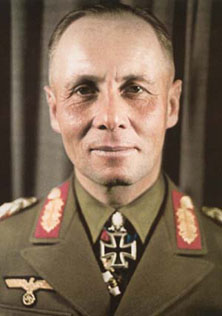
Rommel believed in the offensive.  The Italians tried to hold him back, but he would not listen to them.  Rommel attacked and took Agheila and then Benghazi.  His attack was a surprise both to his superiors and Great Britain.  Churchill paid him credit by stating, "We have a very daring and skilful opponent against us, and, may I say across the havoc of war, a great general. "

Part 4 will be posted soon.

Book Review: Memoirs of the Second World War (Part 2)

Monday, April 8, 2013

"Winston is back" the British Admiralty telegrammed to the Fleet. As soon as war was declared, France and Britain mobilized and though land and air struggles did not begin at once, naval struggles began immediately.  

Poland fell quickly.  Next, Hitler invaded Norway.  The House of Commons was very angry with the British Government after the fall of Norway.  Chamberlain did not feel he could continue as Prime Minister; he resigned and advised the king to send for Winston Churchill.  The king asked Churchill to form a new government.  A national coalition government was formed, consisting of all parties working together.  On May 13, 1940, Churchill asked the House of Commons for a vote of confidence in the new Administration.  He told them, "I have nothing to offer but blood, toil, tears, and sweat."  The House gave a unanimous vote of confidence.

Meanwhile, Germany invaded Holland and Belgium on May 10th.  By the 16th, the Germans had penetrated over 60 miles into France.  Britain supported France as long as she could.  But the defence of France was hopeless.  The 28th Belgian Army surrendered, and the British were forced to evacuate from Dunkirk.  The "Deliverance of Dunkirk" was miraculous and 338,000 British and Allied troops safely landed in England.  On June 10th, Italy declared war on the Allies and attacked France as well.  In the east, the Soviet Foreign Minister congratulated the Germans on their "splendid success."  Russia invaded Lithuania, Latvia, and Estonia and annexed them to the Soviet Union.  

After Dunkirk, Britain faced a very bad weapons shortage.  The United States helped by sending weapons to both the British and French.  The British prepared for a possible German invasion by arming the populace with whatever guns could be found, as well as sporting rifles, clubs, and even spears.  A "Home Guard" was formed, anti-tank obstacles and ditches were made, and the beaches were mined.  

Paris fell on June 14th and three days later, Petain's government asked the Germans for an armistice.  High French military authorities advised, "In 3 weeks England will have her neck wrung like a chicken."

The French Admiral Darlan agreed to let the powerful French fleet come under German control,  so the British conducted "Operation Catapult"to seize, control, or destroy all of the accessible French Fleet.  Part of the fleet volunteered to join the British, but at other ports the British navy had to fight and destroy the French ships.

The British were now completely alone.  As Churchill puts it, "Certainly we had no lack of foes."

Part 3 is coming soon!

Book Review: Memoirs of the Second World War (Part 1)

Friday, April 5, 2013

Memoirs of the Second World War is an abridgment of Winston Churchill's six volumes of The Second World War, a work largely responsible for Churchill being awarded the Nobel Prize in Literature in 1953.  The 1065 pages of this book include an epilogue created especially by Churchill for the abridged version.  This book is a must read for anyone who wants to acquire a thorough understanding of the Second World War in a limited amount of time.  Filled with exciting stories and keen insights, the Memoirs give the reader a view of the war through the eyes of one of its greatest protagonists.  Besides the inherent historical significance of this book, its educational value is enhanced by the author's great vocabulary and writing skills.


The first time I tried to read this book (a few years ago), I quit part of the way through.  Why?  Because it was so fascinating I could think of nothing but what I had read.  This year, I decided to try again, and my efforts were rewarded.  Memoirs of the Second World War proved to be a worthwhile and memorable read.

Churchill begins his account with the origins of the war, which he once called the "unnecessary war."  He recounts the mistakes made by the victors of World War I, and the many more errors which led to the rise of Hitler and the alienation of Mussolini from the Allied cause.  During the years before World War II, Churchill warned constantly of the approaching dangers.  His warnings were unheeded.  Prime Minister Neville Chamberlain followed a policy of diplomacy and appeasement with Hitler.  Hitler played along, promising that each European acquisition would be his last.  He did not want war with Great Britain, but he did want more "Lebensraum" (living space) in Europe.

 Hitler disregarded the treaties made after World War I and rearmed Germany.  The Nazis infiltrated and then took over Austria.  They invaded the Rhineland, and demanded the fortified Sudetenland of Czechoslovakia.  Chamberlain met with Hitler and agreed to give it to him.   Still Britain slept; the Prime Minister rested on the Munich Agreement, stating "I believe it is peace for our time."  Then German troops marched into Prague, and March 14th witnessed the dissolution of the Czechoslovak Republic.  Prime Minister Chamberlain had a change of heart.  He didn't like being lied to and cheated. Chamberlain and the House of Commons backed Poland and France with one accord.  All illusions about Hitler were dispelled.

The Soviets made offers to meet with the Allies,  but unfortunately their offers were received coldly.  Britain and France would not agree to a triple alliance with Russia.  So, the Soviets turned and signed an agreement with the Nazis on August 23rd--at the expense of Poland--agreeing to a 10 year peace.  Stalin toasted to the Fuhrer. 

The Polish attitude was, "With the Germans we risk losing our liberty; with the Russians, our soul."  August 25th, Britain proclaimed a formal treaty with Poland.  Hitler postponed his attack to September 1st to give Britain every chance to back down and avoid war.  But the British stood firm.  The German Panzers rolled in   to Poland early in the morning.  Britain was at war.

The time had come for Churchill, whose warnings had been disregarded, to return to the government.  Chamberlain offered him a position in the War Cabinet and the place of First Lord of the Admiralty (which he had held once before from 1911 to 1915). 

Part 2 of this review will be published tomorrow.  

Edit: Due to unforeseen commitments, the author will not be able to post Part 2 as soon as planned. 

Book Review: Economic Freedom and Representative Government

Thursday, April 4, 2013

Economic Freedom and Representative Government is a lecture delivered by F. A. Hayek at The Royal Society of the Arts on the 31st of October, 1973, about a year before Hayek was awarded the Nobel Prize in Economic Sciences.  This lecture highlights the dangers of unlimited government, points out flaws which lead to unlimited government, and offers a theoretical solution.  As always, Hayek's observations are very perspicacious, and though this lecture was written primarily for a British audience (they do not have a written Constitution), we in the United States today find ourselves facing many of the problems he wrote of 40 years ago.


To begin with, Hayek assumes that the majority of the people are in favor of a free market and against government direction; however, most of the groups would like an exception to be made in their favor.

 Take, for example, an Iowa farmer.  He is in favor of the free market, and though he may dislike the idea of giving welfare to thousands of lazy people in the inner city of Chicago, he may deem farm bills and agricultural subsidies fair and right.  The auto manufacturers couldn't care less about agricultural subsidies, but they want their bailouts, the folks in government housing want their handouts, the banks want a share when they're in trouble, and on and on...

 Any political party that wants to achieve and maintain power is forced to use its powers to buy the support of particular groups "not because the majority is interventionist, but because the ruling party would not retain a majority if it did not buy the support of particular groups by the promise of special advantages."  This is the problem.

Hayek explains that the problem is there because of majority rule.  Whatever the majority decides becomes law, and since it is law, it is believed to be just.  "A legislature is now not a body that makes laws; a law is whatever is resolved by a legislature."  Hence, "law is not dependent on justice but determines what is just."  This is a perversion of "law."  The old, real sense of the word is lost.  The legislature is not bound by committing themselves to general rules, and if they want to retain a majority they must "use coercion in the discriminatory manner that is required to assure benefits to particular people or groups."  

Here in the United States, I must note, we had a law which bound the legislatures to general rules...It was called the Constitution.  Davy Crockett understood this and said, "We have the right as individuals to give away as much of our own money as we please in charity; but as members of Congress we have no right to appropriate a dollar of the public money [for special interests or charity]."  The legislatures were bound to specific duties outlined in the U.S. Constitution, but now they've freed themselves from a strict interpretation of the Constitution and make laws to try to control anything and everything, binding and fettering the people instead.  But, I digress...

According to Hayek, "The main subject of this lecture is what we have to do, if we ever again get a chance to stop those tendencies [outlined above] inherent in the existing political systems which drive us toward a totalitarian order"--an unlimited government.

To preserve individual freedom, Hayek says, coercion must be confined to the general rules of just conduct.  "An individual who is bound to obey only such rules of just conduct as I have called these rules of law in this narrow sense [lawyer's law--relating to the laws which apply equally to all and define the protected sphere of each person with which others are prohibited from interfering, made to "prevent conflicts between people who do not act under central direction but on their own initiative, pursuing their own ends..."] is free in the sense that he is not legally subject to anybody's commands, that within known limits he can choose the means and ends of his activities."  

But how?  How can legislatures, especially divided into political parties that only gain a majority by promising special benefits to some groups, resist these pervasive tendencies?  Hayek admits that there never has been a legislature limited to making laws in the narrow sense described in the last paragraph.  

Hayek proposed having two representative assemblies.  One would make laws in the narrow sense and its members, disinterested citizens, would be elected for very long terms and would not be eligible for re-election.  The other would be governed by the laws of the first assembly in directing government proper.

F.A. Hayek admitted that he did not believe his "utopian construction" of an idea for a government would not be realised in the foreseeable future.  However, he decided to promulgate the idea because as David Hume said, "In all cases, it must be advantageous to know what is the most perfect in the kind, that we may be able to bring any real constitution or form of government as near it as possible, by such gentle alterations and innovations as may not give too great a disturbance to society."

I enjoyed reading this lecture.  The problems presented by Hayek are pertinent today.  I think many of these problems would have been prevented in the United States if we had insisted on keeping Congress and the President bound by a strict interpretation of the Constitution.  

And now, my dear reader, I pose the question to you: what do you believe is the best way to face this problem caused by special interests?  What do you think is the most efficient way to preserve the classical meanings of law and justice?  Is a law whatever the legislature decides, and because a majority decides something should be a "law," is it necessarily just?  Think about it.

Book Review: Understand Your Rights

Monday, December 31, 2012

Many people make New Year's Resolutions.  I make December 28th resolutions.  With the year quickly drawing to a close, I quickly think of all the things I want to finish before the year is over.

It seems Congress has been trying to make resolutions too, but I'm skeptical that any of their December 31st--last 12 hours of the year--resolutions to save our country from the fiscal cliff are going to work, no matter how much Senator Reid "Really hopes so."  

We will survive this fiscal cliff, just like we survived the Mayan Apocalypse and Y2K,  but it will be more serious and it is not going to make life any easier for anyone.  As Hank Anzis wrote in his must-read post "Off the Cliff" it shouldn't be "unreasonable to ask the government to make some tough choices themselves."

The government should make the drastic cuts needed to put our nation back on the right track.  But, it's December 31st.  It's simply not going to happen.    


However, at least one of my December 28th resolutions is going to get done.  That is writing a book review about Understand Your Rights: Because You're About to Lose Them, by Revolutionary War and Beyond.

I was given a free autographed copy of the book by the author and his father (who reenacted John Adams) at the Liberty Fest in Hampton this fall.  I found the book very informative and I would recommend it to anyone looking for a refresher course on the Bill of Rights.  It is written in a trying-to-be-objective manner, explaining both sides of the argument, but it is very definitely  from a conservative Republican perspective.  

The book begins with a Prologue and then the first three chapters give the early history of the United States with the Articles of Confederation and a purposefully weak government.  Then, the arguments for and against the U.S. Constitution (by the Federalists and Anti-Federalists) are explained. 

 One interesting fact I hadn't realized until I read this book is that although the first Congress under the Constitution met in March of 1789, and Washington was inaugurated in May of '89, North Carolina did not join the Union until November of '89, and Rhode Island did not join until May of the following year.  Many of the states would not accept the Constitution without the promise of a Bill of Rights, and so writing the Bill of Rights was a major task of the first Congress. 

Chapter 3 of Understand Your Rights goes hand in glove with Einstein's statement: “The strength of the Constitution lies entirely in the determination of each citizen to defend it.  Only if every single citizen feels duty bound to do his share in this defense are the constitutional rights secure."  This chapter lists various ways the government has taken away rights and declares that only the voters can defend their rights.

The next ten chapters are each dedicated to one of the first 10 amendments, using the same format for each one.  Each chapter starts with the text of the amendment, followed by a short explanation.  

Next comes a history of the rights listed in the amendment.  The histories explain how the rights go back into English history and were developed with the Assize of Clarendon, the Magna Carta, British court cases, Sir William Blackstone, the colonial era and the colonists' relationship with each other and the mother country, the American Revolution, and the Articles of Confederation.  

Then, the book explains how the Amendment effects life today.  A summary of each important court case that involved the Amendment or the right, is given.  Finally, the chapter ends with a summary from the author's perspective about how the right is threatened and what can be done to preserve it. 

 The fourteenth chapter is a conclusion; then there is a very reasonably sized Appendix containing the texts of the Assize of Clarendon, the Magna Carta, the Articles of Confederation and many other documents essential to the history of law in our country.  

The author maintains a positive tone throughout his work, while clearly laying out what he believes are the major threats to the traditional American way of life and government:
Next to the ignorance of the American population about the importance of their rights, an overactive judiciary is probably the number 1 threat to your personal freedom.  The American people must do everything they can to stop the escalating power grab of the judiciary before it is too late and we descend into a totalitarian state."
The courts have, with the 14th ammendment and then the case of Griswold vs. Connecticut, taken more and more power.  The author also points to the administration of Franklin D. Roosevelt as a major turning point during and after which the government has taken more and more power. 


The author believes that "We must shrink the powers of the federal government and the Courts and restore self governance and local state governance."  He warns of "an oligarchical totalitarian system" which is already taking over and will take over, if Americans don't "wake up."  Remedying the problem is not going to be easy, he admits, but "We will win if we don't just lie down and continue to let them [those who want to increase government power]" walk all over us."  

The author concludes by saying:
     "It's time to stop the decay of America.  But it won't happen unless WE do something.  What can we do today?  Educate ourselves and others.  Vote!  It is our responsibility.  Nothing is going to change...unless we change!"   
 I wrote an article that expressed most of the same sentiments last year.  If every American understood their rights and treasured them, our country would take a turn for the better.

But, it's December 31st.  Midnight is in 12 hours.  We're about to go off the cliff.

In any case, I've decided not to worry as worrying doesn't help anything, so Have a Happy New Year!
DESIGNED BY ECLAIR DESIGNS